Flawed statistics and weak production capability among factors undermining the performing arts integrity

Flawed statistics and vulnerable production capability of theatres in China are among the contributing factors undermining the integrity and development of the performing arts in China, revelations from a professional forum just held in Hangzhou show.
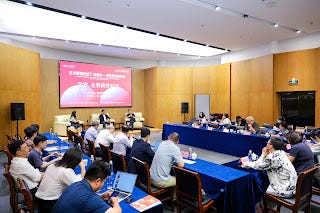
Around 50 participants, academics and managers included, took part in the "Seminar on the Operation Mode of the Integration of the Performing Group and Site from the Perspective of Arts Management", a two-day forum exploring, to put it short, ways for artists and venues to come together for higher efficiency, bigger revenue and better prospect.
The event was hosted by the Advanced Research Centre on Arts Administration of the Zhejiang Conservatory of Music in Hangzhou, May 25-26. Prof Lin Homgming is the director of the centre.
In a panel I introduced stagione and repertory theatres, two ways of theatre production that have played a dominant role in theatres and opera houses outside of China.
In the afternoon of the first day I delivered a speech on orchestra and its home with content built around an interview with Gerald Mertens of unisono, formerly known as DOV.
The two-day behind-closed-door seminar and its discussions have impressed me as so provocative, so candide and so pragmatic. It has also put into the spotlight the structural and statistical failure derailing the performing arts industry in this country as a whole for decades.
What's more, they were revealed by two most respected names in the sector.
Prof Lin Hongming is the host of the forum after serving 14 years as the founding president of SHOAC and then head of the pilot project of Grand Opera Shanghai GOSH (due completion 2025). Mr Chen Ping is the founding president of the mammoth NCPA in Beijing who chairs the China Theatres Development Research Centre, a national think tank on theatre infrastructure.
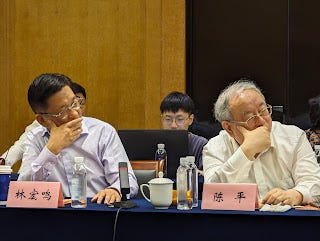
Both are in retirement not bound by the establishment anymore, and hence both are in a perfect position to say what they've wanted to say for a long time.
Unfortunately as a guest speaker I am bound by NDA and thus not able to share what has been revealed in numbers, including ticket sales, revenue, profit, attendance, funding, performances, and demography sampled from 2019-2023 spanning pre to post pandemic, most of them shown for academic research for the first time.
The most updated numbers and figures have offered a staggering and painful look into how the performing arts industry has suffered from a lack of well coordinated national portfolio in planning an individual theatre and presenting its programme, and how geographical blindspots are left in the expansion of major theatre links.
All the speakers urge a closer tie to be forged between theatres and local troupes, and I can't agree more on that as the nation is embracing for either a collision course or a decoupling movement from the "free" world.